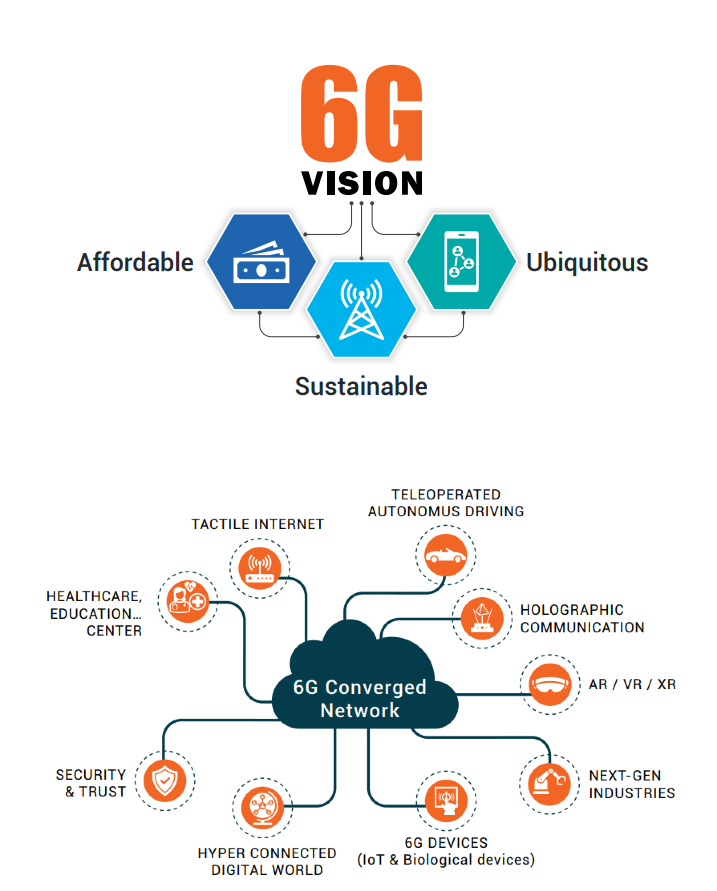
At the India Mobile Congress 2025, Union Minister for Communications Jyotiraditya Scindia unveiled a bold vision for India’s digital future. He announced that the country’s push towards 6G technology could contribute up to $1.2 trillion to India’s GDP by 2035. This ambitious goal positions India at the forefront of the next-generation habanero casino games telecommunications revolution.
The 6G initiative aims to enhance connectivity, support emerging technologies like artificial intelligence and the Internet of Things, and drive economic growth across various sectors. The government’s commitment to this vision reflects a strategic move to harness the potential of advanced technologies for national development.
As the world moves towards 6G, India’s proactive approach could set a benchmark for other nations, showcasing how digital innovation can be a catalyst for economic transformation.
This development underscores India’s commitment to modernizing its aviation infrastructure amid rapid economic growth and a surge in air travel. Since 2014, the number of airports in India has more than doubled from 74 to 160, reflecting the nation’s expanding connectivity and infrastructure capabilities.
The Navi Mumbai International Airport is poised to become a cornerstone of India’s transportation network, enhancing connectivity and supporting the country’s economic aspirations.
The Bharat 6G Alliance is a national platform bringing together academia, startups, research institutions, industries, and policymakers to drive the development and deployment of 6G technologies. The alliance aims to ensure that 6G technology remains affordable, scalable, and accessible, preventing digital exclusion and accelerating national development.
India’s 6G vision is aligned with the International Telecommunication Union’s (ITU) International Mobile Technology (IMT) 2030 framework, contributing to global capabilities like ubiquitous connectivity, interoperability, and sustainability. The ITU 6G Framework has been formulated with collaborative efforts of member countries of the UN, in which India has played a front-runner role from the very beginning.
The rollout of 6G technology is expected to create entirely new industries and revolutionize existing ones, potentially contributing up to $1.2 trillion to India’s economy by 2035. This growth would be fueled by increased productivity and workforce efficiency across various sectors. Financial services and manufacturing are expected to be the primary beneficiaries, with AI potentially accounting for 20-25% of their GDP contributions by that time.